Reviewing the "Practice Social Distancing" Design for Embroidery
As a designer who has spent years translating digital concepts into thread, I approach every new graphic with a mix of curiosity and caution. When I first encountered the PRACTICE SOCIAL DISTANCING design, my immediate reaction was not just about the message, but about its potential translation from screen to fabric. This is not merely a digital asset; it is a cultural timestamp. For embroidery designers, small business owners, and Etsy sellers, understanding how this specific graphic performs in a real-world stitching environment is crucial before committing to production.
First Impressions and Visual Personality
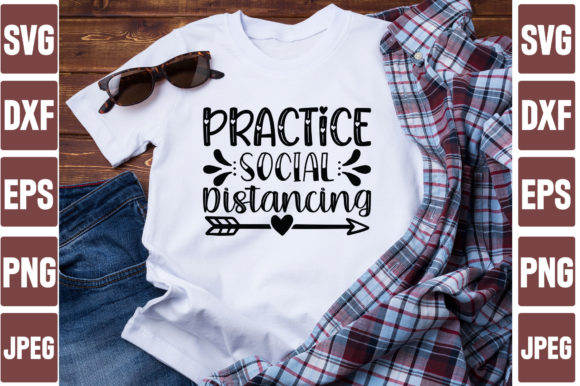
The design arrives as a high-resolution PNG file, sized at 12″x12″ with 300 dpi. Visually, it carries a bold, assertive mood. The typography suggests a modern, no-nonsense attitude that resonates with the recent global shift in social norms. For an embroidery project, the clarity of the lines is promising. However, as any experienced craft entrepreneur knows, a clean PNG does not automatically equal a clean stitch-out. The visual personality here is loud and declarative, which means it demands attention on the finished product. It fits naturally into the category of statement pieces, ideal for custom apparel where the wearer wants to communicate a boundary or a lifestyle choice clearly.
When evaluating this as a T-Shirt Design or general Graphics asset, the colorful nature of the original file suggests vibrancy. But in embroidery, we must think in terms of thread colors and stitch types. Does the design rely on subtle gradients that will get lost in satin stitch? Or does it use solid blocks of color that translate well to fill stitch? My assessment is that this design thrives on contrast. It is not a delicate, whisper-quiet motif; it is a shout. This makes it excellent for tote bag designs or sweatshirt embroidery where visibility is key.
Real-World Application: The Tote Bag Test
To truly gauge the viability of PRACTICE SOCIAL DISTANCING, I mentally placed it on a canvas tote bag, a staple item for many small shop products. A tote bag offers a flat, stable surface, which is ideal for larger graphics. The 12-inch width of the source file allows for significant scaling. If you are creating a handmade product for a boutique, this size permits the text to be legible from a distance, enhancing brand consistency and buyer engagement.
Imagine a customer walking through a farmers' market or a busy street. The bold lettering acts as both fashion and function. For an Etsy seller, this translates to higher perceived value because the message is clear and the execution looks professional. However, one must consider the fabric texture. Canvas is forgiving, but if you are attempting this on a thinner material, the density of the stitches required to cover such a large area could cause puckering. This is where your choice of stabilizer becomes non-negotiable. A cut-away stabilizer would likely be necessary to support the weight of the thread and maintain the integrity of the design.
Navigating Technical Challenges in Stitching
While the concept is strong, the technical execution requires careful planning. Since the provided details specify a PNG file rather than a native embroidery file format like PES or DST, you will need to digitize this graphic or use auto-digitizing software with extreme caution. Auto-digitizing often fails with complex typography, creating messy jump stitches or excessive thread breaks. For a professional finished product, manual digitizing is recommended to control stitch direction and density.
Consider the corners of the letters. Sharp angles in text can become bulky when filled with satin stitch. You may need to adjust the stitch angle or switch to a running stitch for finer details to prevent thread buildup. Additionally, if you are working with dark fabric, you must ensure that the thread colors chosen provide sufficient contrast. A black thread on a navy shirt will render the PRACTICE SOCIAL DISTANCING message invisible. Always test your design on scrap fabric first, using the exact thread colors and fabric type intended for the final item.
Where to Use Caution
Not every substrate is suitable for this type of graphic. I would advise against using this design on stretchy fabrics like lightweight jersey without proper stabilization, as the tension can distort the lettering. Curved surfaces, such as caps or hats, present another challenge. The 12-inch width is too large for most standard cap hoops, meaning you would need to scale it down significantly. At a smaller size, the legibility of the text might suffer, and the intricate parts of the letters could merge together. For baby embroidery, the dense stitch areas might feel too stiff against sensitive skin, so consider placing it on the back of a onesie rather than the front chest area.
Commercial Viability and Brand Trust
For commercial embroidery projects, the appeal of PRACTICE SOCIAL DISTANCING lies in its relevance. It taps into a shared experience, making it a powerful tool for personalized gifts and holiday embroidery themes that reflect current times. Customers are drawn to items that feel personal and timely. By offering this on high-quality items like aprons or pillow covers, you elevate the perceived craftsmanship of your small business.
However, professionalism is key. A sloppy stitch-out can damage customer trust. Ensure that your hoop size matches the design dimensions to avoid distortion. Check whether the design works for both personal and commercial projects by verifying licensing terms. Since the source is a PNG, you have the flexibility to adapt it, but you must ensure you have the right to sell the resulting physical goods. Many digital embroidery file creators offer specific licenses for commercial use, so always confirm this before listing items on your online store.
Final Designer Notes
Before launching this as a new addition to your craft business inventory, take these practical steps:
- Test on Scrap Fabric: Never skip this step. It reveals issues with tension and density before you ruin expensive material.
- Check Thread Color Contrast: Use a color wheel to ensure your thread choices pop against the fabric background.
- Review Stitch Density: High-density fills can make fabric stiff. Adjust settings to balance coverage with flexibility.
- Inspect Small Details: Zoom in on your digitized version to ensure tiny gaps or overlaps are corrected.
- Mockup in Black and White: This helps you see the value structure without the distraction of color, ensuring the shape holds up.
In conclusion, PRACTICE SOCIAL DISTANCING is a potent graphic with strong potential for embroidery if handled with technical precision. It is not just a print-ready image; it is a design challenge that rewards careful planning. For the diligent maker, it offers a chance to create meaningful, high-value items that resonate with today’s audience. Whether you are decorating a sweatshirt or creating a unique embroidered patch, the key lies in respecting the medium of thread and fabric. With the right stabilizer, thoughtful digitizing, and quality materials, this design can become a standout piece in your portfolio of handmade products.